
Holiday Party Budget vs. Gift Boxes: The Per-Head Math for a Team That Can't Gather
Pacific Gift Box Co.
·Published September 10, 2026 · Updated October 24, 2026
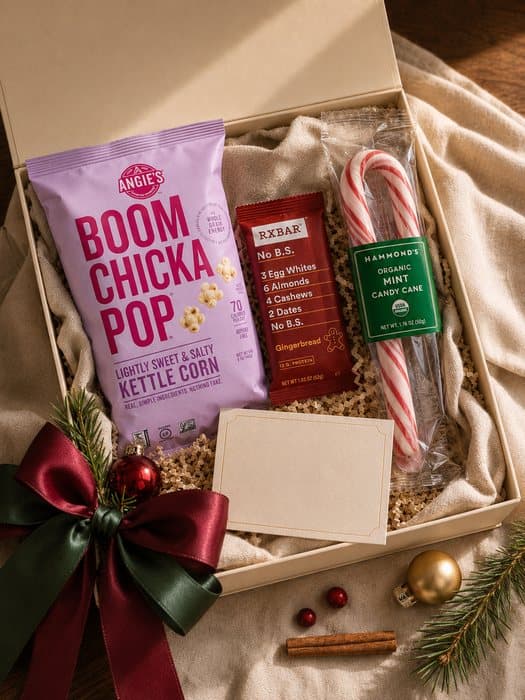
When your team is spread across six time zones and the holiday season hits, the old playbook — rent a venue, order passed appetizers, watch the CEO do karaoke — simply doesn't work anymore. Holiday party alternatives for remote teams are purposeful, budget-conscious substitutes for the in-person office party that make distributed employees feel genuinely recognized during the holidays — without requiring anyone to be in the same room, or even the same state. This article breaks down the per-head math so you can make a defensible, side-by-side comparison before your next budget conversation.
A holiday party alternative for remote teams is any structured recognition or celebration format designed specifically for employees who cannot physically gather — including curated gift boxes shipped to home addresses, virtual experiences paired with tangible items, or year-round recognition programs that replace a single annual event with a consistent rhythm of acknowledgment. The defining characteristic is equity: every employee, regardless of zip code, receives something real.
A curated gift box shipped to a home address before the holidays delivers more lasting recognition signal per dollar than any single-night event — because it reaches every employee equitably, leaves something tangible behind, and doesn't require a minimum headcount or a flight.
2026 order-by dates
| Order type | Thanksgiving | Christmas |
|---|---|---|
| Non-branded, shipped nationwide | Tue, Nov 10 | Mon, Dec 14 |
| Non-branded, SoCal, 50+ boxes | Tue, Nov 17 | Fri, Dec 18 |
| Custom-branded (logo, ribbon, inserts) | Fri, Oct 23 | Fri, Nov 20 |
Boxes run $59–$179, shipping included. Orders start at 12 boxes; custom and logo-branded boxes start at 100. See the Holiday Collection and get a quote.
What a Traditional Holiday Party Actually Costs Per Head
Most HR managers and office managers anchor their holiday event budget to total spend, not per-person spend. That's the first mistake. When you reverse the math, the numbers are clarifying — and sometimes uncomfortable.
The Honest Line Items
A mid-tier in-person holiday party in a major U.S. city typically runs $75–$200 per person once you add venue rental, catering, bar service, AV, and a planner's cut. That's before the less visible costs: travel reimbursements for remote employees who fly in, two or three hours of lost productivity per attendee for travel and recovery, and the soft cost of employees who simply don't attend because geography makes it impractical.
Recognition programs that feel personal and timely tend to be among the highest-leverage investments HR teams can make in engagement — yet a one-night party produces almost no lasting recognition signal. The memory fades. There's nothing tangible to anchor the moment.
The IRS also caps business gift deductions at $25 per recipient per year under Publication 463, which is worth knowing when you're structuring any year-end recognition program. A curated gift box, depending on how it's structured, may fall into a different category — always confirm with your accountant, but it's a question worth asking.
The Remote Attendance Problem
Consider this scenario: a People-Ops manager at a 60-person SaaS company plans a hybrid holiday dinner. Thirty-eight employees are local and can attend in person; twenty-two are fully remote. The team sets up a Zoom "watch party" for the remote group. The in-person employees are loud and distracted. The remote employees sit in front of their laptops eating takeout they ordered themselves, feeling like an afterthought. The effective per-head cost for employees who attended meaningfully? Closer to $300. The remote employees? They received a Zoom link and nothing else.
That equity gap is exactly why holiday party alternatives for remote teams have moved from a pandemic workaround to a permanent best practice for distributed people teams — and why the per-head math deserves a closer look before the next budget cycle.
The Per-Head Math: Gift Boxes vs. a Party
Let's run a simple comparison. Assume a team of 30 employees, split roughly 50/50 between a home-office hub and distributed remote locations.
Side-by-Side Cost Comparison
| Option | Estimated Per-Head Cost | Reaches Remote Employees? | Tangible / Lasting? | Scalable to Any Team Size? |
|---|---|---|---|---|
| In-person holiday party (venue + catering + bar) | $100–$200 | No (or poorly) | No | No — fixed venue minimums |
| Virtual party (platform + entertainment + e-gift card) | $40–$80 | Yes | No | Somewhat |
| Curated gift box — The Essential Box, plus shipping | $89 per box, plus shipping quoted separately | Yes — ships to any address | Yes | Yes — orders start at 12 boxes |
| Curated gift box — The Premium or Reserve Box, plus shipping | $129–$179 per box, plus shipping quoted separately | Yes — ships to any address | Yes | Yes — orders start at 12 boxes |
| Hybrid party + gift box for remote employees only | $120–$250 blended | Partially | Partially | Complex to manage |
The takeaway isn't that gift boxes are always cheaper — it's that they're consistently equitable. Every employee, regardless of zip code, receives the same quality of recognition. That matters more than most finance teams realize until they're staring at an engagement survey where remote employees rate "feeling valued" significantly lower than their in-office peers.
Why Personal Recognition Drives Retention Over Parties
Employees who do not feel adequately recognized tend to report a higher likelihood of leaving within the year. Meaningful, specific recognition — the kind that feels personal rather than performative — is often described as one of the strongest drivers of retention and discretionary effort. A box packed by a person, for a person, with items selected for quality rather than logo real estate, delivers that signal in a way a venue happy hour cannot.
Recognition programs also tend to be most effective when they are timely, visible, and tied to a specific moment — all three of which a well-timed holiday gift box can accomplish, and none of which a retroactive e-gift card can replicate.
What Makes a Good Holiday Gift Box — and What to Skip
Not all gift boxes are created equal. If you've ever received a corporate gift box containing a branded stress ball, a $4 bag of mixed nuts, and a coupon for a service you don't use, you know the difference between recognition and obligation-fulfillment. The goal is recognition, not merch — what employees actually keep, not a logo water bottle that goes straight into a drawer.
What Employees Actually Keep
- Artisan food and beverage items — quality chocolates, small-batch coffee or tea, a good hot sauce. Consumables with genuine character get used and remembered.
- Cozy or comfort items — a quality candle, a soft sock, a weighted eye mask. These feel personal, not corporate.
- Practical desk or home-office items — but only if they're genuinely well-made. A $3 notepad is not a gift; a beautiful one is.
- A handwritten or high-quality printed note — this is the single most underrated component of any gift box. People keep notes. They throw away packing peanuts.
What to Skip
- Logo-heavy merchandise that turns the employee into a walking billboard — light co-branding is fine where it serves the employee's experience, not the company's visibility
- Low-quality filler items that exist to make the box look full
- Anything that requires the recipient to "do something" to redeem it — portals, codes, surveys
- Generic gift cards presented as a substitute for thought — useful in some contexts, but not as standalone recognition
Co-Branding: Where It Helps and Where It Doesn't
A small branded element — a custom belly band, an insert card with the company logo, a sticker — can reinforce belonging without overwhelming the gift. The test: would an employee leave this item on their desk because they like it, or would they hide it because it's an advertisement? Co-branding should serve the employee's experience of feeling welcomed and valued, not the company's desire for visibility. When in doubt, keep it minimal and let the quality of the contents carry the recognition.
If you're planning a Q1 kickoff alongside a holiday gift program, it's also worth reading about Sales Kickoff and Q1 Offsite Boxes: Ordering in December for a January Event — the logistics of ordering in December for a January ship date are worth understanding before you're under deadline pressure.
How to Run This as a Repeatable Program, Not a One-Off
The most effective holiday party alternatives for remote teams aren't event substitutes — they're the beginning of a year-round recognition rhythm. When People-Ops teams use a gift box program for the holidays, they often discover it integrates naturally into onboarding, work anniversaries, and milestone recognition. The infrastructure you build in November pays dividends in March.
A Hypothetical Standing Program in Practice
Take a People-Ops manager at a 45-person fully distributed company. She has no single headquarters, a hiring pace of two to four new employees per month, and a budget that needs to flex. Rather than planning a one-time holiday event she can't execute equitably, she sets up a standing gift box program: The Essential Box ($89) for new hires in months one through three, The Premium Box ($129) for the 90-day mark, and The Reserve Box ($179) for one-year anniversaries and promotions. She submits recipients as they come up, grouping them into orders of at least 12 boxes — the standard minimum, or 100 if she wants her logo added. Boxes ship directly to each employee's home address before the relevant date. Her remote employees in four different states receive the same quality of recognition as they would if they were sitting next to her in an office.
Building a Standing Program Without Enterprise Complexity
You don't need a contract with a gifting SaaS platform that charges $15,000 per year to access their portal. A standing program can be as simple as: choose your tier, share a recipient list as hires come in or milestones hit, and let a real person handle the packing and shipping on your schedule. Orders start at 12 boxes, so a slow hiring month might mean one order of 12 and a busy one might mean several; custom or logo-branded boxes start at 100.
Our Gift Builder tiers — The Essential Box $89, The Premium Box $129, and The Reserve Box $179 per box, shipping quoted separately — are built exactly for this kind of flexible, ongoing use. They ship to distributed home addresses, arrive before day one (or before the holiday), and are packed by a person, for a person. See the full tier details on the build page.
For teams with employees concentrated in specific regions, it's also worth knowing that regional logistics can affect timing. Our post on Same-Day Corporate Gift Delivery in Los Angeles — What to Expect walks through what's realistic for time-sensitive situations.
Timing the Holiday Send
The practical rule: order by Mon, Dec 14, when non-branded orders ship at the projected UPS Ground cutoff and arrive by Dec 24. Earlier is better. Carriers get congested, and a gift box that arrives after the holiday is a missed moment, not a recognition win. Build in a week of buffer. Communicate a recipient list deadline to whoever is packing your order — and if you're still collecting home addresses from a recently hired cohort, that address-collection step is almost always the bottleneck, not production time.
Add the year's hires, milestones and December together and the count for a distributed team climbs quickly. The annual gifting program takes that decision out of the busy weeks: it starts at 50 gifts a year (15% off from 100), you choose the box and the branding once, we store the inventory in Costa Mesa, and each gift ships individually across the year to any contiguous-US address, shipping included, at the program rate of $89 per gift for Program Essential against $105 regular. Under 50 a year, a one-time order starts at 12 boxes; custom or logo-branded boxes start at 100.
Frequently Asked Questions
Q: How do holiday party alternatives for remote teams compare in cost to a traditional office party?
A: Holiday Collection boxes run $59–$179 per person with shipping included; build-your-own tiers are $89–$179 per box plus shipping quoted separately — meaningfully less than the $100–$200 per-head cost of an in-person holiday party when you factor in venue, catering, and bar service. More importantly, a gift box reaches every remote employee equally, while a single-night event often can't.
Ready to send? Tell us your head count and whether it's one address or many — get a quote on the Holiday Collection or build your own box. We reply within one business day. Christmas orders: Mon, Dec 14 for shipped boxes, Fri, Nov 20 if you want your logo on them.
Looking for employee onboarding gifts? See Day One Kits →
Related: Welcome kits for people-ops teams
Request onboarding-kit pricing
Tell us your hiring pace and where kits ship — we'll reply with ideas and pricing. Orders start at 12 boxes.